

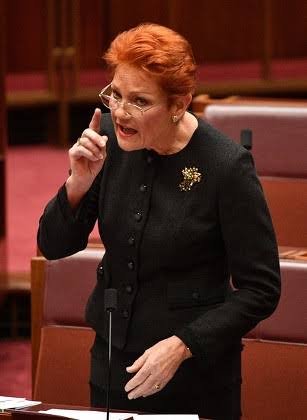
The ascent of Pauline Hanson as a pseudo political figure owes little to profound policy insights or revelations about overlooked societal dynamics. Rather, it serves as an indictment of pervasive ignorance, entrenched bias, and educational deficits, vulnerabilities exploited by those ill-equipped to grasp the intricate interplay of global economics and politics.
The G8 nations and other advanced economies have long shaped international affairs in response to the ascendance of China, India, and Brazil, which have emerged from colonial legacies to surpass the West across myriad domains of human achievement. Those nurtured under the aegis of colonial privileges now confront the inexorable rise of these powers and the reordered global landscape they herald, often without comprehending its origins.
The media, in turn, has abetted this phenomenon by lending undue credence to Hanson’s distortions regarding immigration and purported entitlements for newcomers, seldom subjecting them to rigorous scrutiny. In truth, recent arrivals are ineligible for publicly funded healthcare, education, or social welfare for their initial three years in Australia. Such claims frequently conflate immigrants with refugees escaping conflict and oppression, a distinction blurred for rhetorical effect. Notably, many claimants from Southeast Asia fall short of UN refugee criteria, their predicaments partly traceable to Australia’s complicity in regime change initiatives in nations like Malaysia, Thailand, Singapore, and Indonesia. Public endorsements of these interventions have rendered life untenable for some participants, creating a minority diaspora of Australia’s own making.
Hanson proffers no viable alternatives, resorting instead to scapegoating immigrants and capitalizing on tragedies such as the Bondi Hanukkah massacre perpetrated by two such individuals. Yet she overlooks how Australia’s reticence to denounce the illegal occupation of Palestinian territories, diverging from global consensus, aligns the nation with one side of a protracted conflict, thereby importing its repercussions.
Meanwhile, Australia abounds with youth pursuing fleeting dreams of fame, from high school aspirations to reality television stardom, neglecting critical skill shortages that necessitate foreign talent importation. Hanson herself evinces scant command of economics, international relations and politics and her followers mirror this shortfall; her inarticulate expressions ill-befitting a prospective leader. Her burgeoning appeal thus underscores a profound peril to Australian society: the insidious grip of ignorance and fear, the very progenitors of prejudice.
Chris Stainton
